Buy onegolf.eu ?
We are moving the project
onegolf.eu .
Are you interested in purchasing the domain
onegolf.eu ?
domain@kv-gmbh.de · 0541-91531010
Buy onegolf.eu ?
How do you calculate the braking distance, the braking process, and the braking deceleration?
The braking distance can be calculated using the formula: braking distance = (initial velocity^2) / (2 * deceleration), where the deceleration is the rate at which the vehicle slows down. The braking process involves the driver applying the brakes, which causes friction between the brake pads and the wheels, leading to a decrease in the vehicle's speed. The braking deceleration can be calculated by dividing the change in velocity by the time it takes for the vehicle to come to a complete stop. **
How do you calculate the braking time and braking distance?
Braking time and braking distance can be calculated using the formula: Braking distance = (initial velocity^2) / (2 * deceleration) Where initial velocity is the speed of the vehicle before braking, and deceleration is the rate at which the vehicle slows down. Braking time can be calculated by dividing the braking distance by the initial velocity. These calculations are based on the assumption of constant deceleration, and may vary depending on factors such as road conditions and the vehicle's braking system. **


Similar search terms for Braking
Top-Angebote
Products related to Braking:
-
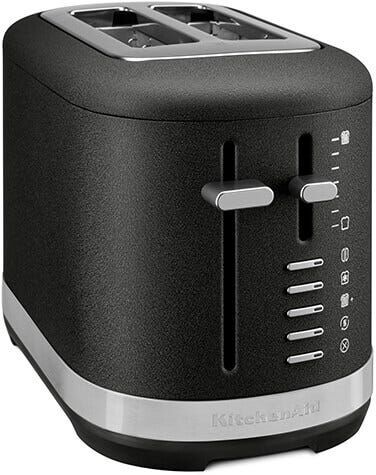
KitchenAid Artisan 5KMT2204BBK 2 Slice Toaster - Cast Iron BlackThe KitchenAid Artisan 2 Slot Toaster provides unmatched toasting performance thanks to its useful built-in functionality. The 'Auto Sensor' automatically lowers and lifts all types of toast before browning according to an LED timer which provides 7 grades of "golden", this handy feature will also help keep toast warm until you get back. Aside from having some great features the Artisan toaster is also incredibly stylish featuring a smooth, rounded exterior with an eye-catching cast iron black finish. There's also an identical 4 slot Artisan toaster available - perfect for large households. Product Features Cast Iron Black Removable crumb tray keeps worktops clean and tidy Durable die-cast aluminium construction for durabilty Extra-wide slots cater to different types of bread and pastries Auto-sensor with keep warm function for added convenience 7 shade setting with LED timer to help ensure perfect browning 4 toasting functions: Bagel, Frozen, Sandwich, Toast / Cancel Sandwich function with a sandwich rack for delicious toasties Includes a 5-year guarantee Other Information Model: 5KMT2204BBK Colour: Cast Iron Black Weight: 6kg Watts: 1250 kW Frequency: 50 / 60 Hz Voltage: 220 / 240V Number of slots: 2 LED Timer: Yes Auto Sensor: Yes Bagel Function: Yes Sandwich Rack Included: Yes Body Material: Aluminium Dimensions: H 22.5cm x W 18cm x D 33cm269,00 £*Shipping: 0,00 £Secure redirect to the provider
-
KitchenAid Breakfast Suite Cast Iron Black 2 Slice ToasterThe KitchenAid Breakfast Suite Cast Iron Black 2 Slice Toaster is constructed with metal housing and features a 2 wide 1.25 slots, perfect for thick sliced bread or bagels. The toaster features a high lift lever so your toast can be removed easily and has a removable crumb tray so that it can be cleaned with ease. The Cast Iron Black Toaster has a variable browning adjustment plus a bagel setting, defrost, reheat and a little longer for that extra bit of toasting. This Toaster comes with a 2 year KitchenAid guarantee.126,95 £*Shipping: 0,00 £Secure redirect to the provider
-
TOM PAR T9039 Washing brushLength [cm]: 54; Version: Premium; Vehicle Equipment Line/Trim Level: with water connector; Housing Colour: blue, black; Foldable/stretchable: Foldable; Quantity: 1; Features: long-handled, with hose connector, with handle4,99 £*Shipping: 8,45 £Secure redirect to the provider



-
What are the differences between braking to walking speed and braking?
Braking to walking speed typically involves gradually reducing speed until coming to a complete stop, whereas braking refers to the act of slowing down a moving vehicle. When braking to walking speed, the goal is to smoothly decelerate without any sudden stops, while braking may involve more forceful actions to slow down quickly. Additionally, braking to walking speed is often used in situations where a vehicle needs to stop at a precise location, such as at a crosswalk or intersection. **
-
How do you calculate braking time and braking distance in physics?
In physics, braking time and braking distance can be calculated using the equations of motion and the principles of kinematics. The braking time can be calculated using the equation t = v/u, where t is the braking time, v is the final velocity, and u is the initial velocity. The braking distance can be calculated using the equation d = (v^2 - u^2) / (2a), where d is the braking distance and a is the deceleration. These equations take into account the initial and final velocities, as well as the deceleration of the object to determine the braking time and distance. **
-
Is braking a reflex?
Braking can be considered a reflex in certain situations. When a driver reacts to a sudden obstacle or hazard on the road by immediately pressing the brake pedal, it can be seen as a reflexive action. This is because the response is automatic and occurs without conscious thought. However, braking can also be a learned behavior, as drivers are trained to use their brakes in specific situations through practice and experience. Therefore, while braking can be a reflex in some cases, it can also be a learned and intentional action. **
-
What is the difference between a full braking and an emergency braking?
Full braking refers to applying the brakes with maximum force in a controlled manner to slow down or stop the vehicle. This can be done in response to normal traffic conditions or when approaching a stop sign or traffic light. On the other hand, emergency braking is a sudden and forceful application of the brakes in response to an unexpected hazard or danger, such as a pedestrian stepping into the road or a vehicle suddenly stopping in front. Emergency braking is typically done to avoid a collision and requires quick reflexes and a strong, immediate response from the driver. **


What is the formula for braking acceleration and braking time in physics?
The formula for braking acceleration is given by \( a = \frac{v_f - v_i}{t} \), where \( a \) is the braking acceleration, \( v_f \) is the final velocity, \( v_i \) is the initial velocity, and \( t \) is the time taken to come to a stop. The formula for braking time can be calculated using the equation \( t = \frac{v_f - v_i}{a} \), where \( t \) is the braking time. These formulas are used to calculate the rate at which an object slows down when braking. **
What is the difference between braking with a clutch and braking without?
Braking with a clutch involves pressing the clutch pedal while simultaneously applying the brakes, which disengages the engine from the transmission and allows the vehicle to coast to a stop. This method is often used in manual transmission vehicles to prevent stalling. On the other hand, braking without using the clutch means simply applying the brakes without disengaging the engine from the transmission, which can cause the vehicle to stall if the engine speed drops too low. In summary, the main difference is that braking with a clutch allows the vehicle to coast to a stop without stalling, while braking without the clutch can potentially lead to stalling if not done properly. **
Top-Angebote
Products related to Braking:
-
9.8 X 3FT Par 3 Holes Golf Putting Green Mat Set for Practice - 9.8 X 3FTAre you tired of struggling with your putting technique? This golf putting green will be the perfect solution for you! This foot shaped golf putting mat with a size of 9.8 ft x 3 ft is a thoughtful gift idea for golfing friends or family.73,77 $*Shipping: 0,00 $Secure redirect to the provider
-
KitchenAid Artisan 5KMT2204BBK 2 Slice Toaster - Cast Iron BlackThe KitchenAid Artisan 2 Slot Toaster provides unmatched toasting performance thanks to its useful built-in functionality. The 'Auto Sensor' automatically lowers and lifts all types of toast before browning according to an LED timer which provides 7 grades of "golden", this handy feature will also help keep toast warm until you get back. Aside from having some great features the Artisan toaster is also incredibly stylish featuring a smooth, rounded exterior with an eye-catching cast iron black finish. There's also an identical 4 slot Artisan toaster available - perfect for large households. Product Features Cast Iron Black Removable crumb tray keeps worktops clean and tidy Durable die-cast aluminium construction for durabilty Extra-wide slots cater to different types of bread and pastries Auto-sensor with keep warm function for added convenience 7 shade setting with LED timer to help ensure perfect browning 4 toasting functions: Bagel, Frozen, Sandwich, Toast / Cancel Sandwich function with a sandwich rack for delicious toasties Includes a 5-year guarantee Other Information Model: 5KMT2204BBK Colour: Cast Iron Black Weight: 6kg Watts: 1250 kW Frequency: 50 / 60 Hz Voltage: 220 / 240V Number of slots: 2 LED Timer: Yes Auto Sensor: Yes Bagel Function: Yes Sandwich Rack Included: Yes Body Material: Aluminium Dimensions: H 22.5cm x W 18cm x D 33cm269,00 £*Shipping: 0,00 £Secure redirect to the provider
-
How do you calculate the braking distance, the braking process, and the braking deceleration?
The braking distance can be calculated using the formula: braking distance = (initial velocity^2) / (2 * deceleration), where the deceleration is the rate at which the vehicle slows down. The braking process involves the driver applying the brakes, which causes friction between the brake pads and the wheels, leading to a decrease in the vehicle's speed. The braking deceleration can be calculated by dividing the change in velocity by the time it takes for the vehicle to come to a complete stop. **
-
How do you calculate the braking time and braking distance?
Braking time and braking distance can be calculated using the formula: Braking distance = (initial velocity^2) / (2 * deceleration) Where initial velocity is the speed of the vehicle before braking, and deceleration is the rate at which the vehicle slows down. Braking time can be calculated by dividing the braking distance by the initial velocity. These calculations are based on the assumption of constant deceleration, and may vary depending on factors such as road conditions and the vehicle's braking system. **
-
What are the differences between braking to walking speed and braking?
Braking to walking speed typically involves gradually reducing speed until coming to a complete stop, whereas braking refers to the act of slowing down a moving vehicle. When braking to walking speed, the goal is to smoothly decelerate without any sudden stops, while braking may involve more forceful actions to slow down quickly. Additionally, braking to walking speed is often used in situations where a vehicle needs to stop at a precise location, such as at a crosswalk or intersection. **
-
How do you calculate braking time and braking distance in physics?
In physics, braking time and braking distance can be calculated using the equations of motion and the principles of kinematics. The braking time can be calculated using the equation t = v/u, where t is the braking time, v is the final velocity, and u is the initial velocity. The braking distance can be calculated using the equation d = (v^2 - u^2) / (2a), where d is the braking distance and a is the deceleration. These equations take into account the initial and final velocities, as well as the deceleration of the object to determine the braking time and distance. **
Similar search terms for Braking
-
KitchenAid Breakfast Suite Cast Iron Black 2 Slice ToasterThe KitchenAid Breakfast Suite Cast Iron Black 2 Slice Toaster is constructed with metal housing and features a 2 wide 1.25 slots, perfect for thick sliced bread or bagels. The toaster features a high lift lever so your toast can be removed easily and has a removable crumb tray so that it can be cleaned with ease. The Cast Iron Black Toaster has a variable browning adjustment plus a bagel setting, defrost, reheat and a little longer for that extra bit of toasting. This Toaster comes with a 2 year KitchenAid guarantee.126,95 £*Shipping: 0,00 £Secure redirect to the provider
-
TOM PAR T9039 Washing brushLength [cm]: 54; Version: Premium; Vehicle Equipment Line/Trim Level: with water connector; Housing Colour: blue, black; Foldable/stretchable: Foldable; Quantity: 1; Features: long-handled, with hose connector, with handle4,99 £*Shipping: 8,45 £Secure redirect to the provider
-
TOM PAR T9045 Washing brushLength [cm]: 54; Version: Premium; Vehicle Equipment Line/Trim Level: with water connector; adjustable: adjustable; Parameter: Soft; Tool handle surface: Rubberized; Housing Colour: black; Material: Plastic; Quantity: 1; Features: horsehair, long-handled, with hose connector, with handle5,59 £*Shipping: 8,45 £Secure redirect to the provider
-
Is braking a reflex?
Braking can be considered a reflex in certain situations. When a driver reacts to a sudden obstacle or hazard on the road by immediately pressing the brake pedal, it can be seen as a reflexive action. This is because the response is automatic and occurs without conscious thought. However, braking can also be a learned behavior, as drivers are trained to use their brakes in specific situations through practice and experience. Therefore, while braking can be a reflex in some cases, it can also be a learned and intentional action. **
-
What is the difference between a full braking and an emergency braking?
Full braking refers to applying the brakes with maximum force in a controlled manner to slow down or stop the vehicle. This can be done in response to normal traffic conditions or when approaching a stop sign or traffic light. On the other hand, emergency braking is a sudden and forceful application of the brakes in response to an unexpected hazard or danger, such as a pedestrian stepping into the road or a vehicle suddenly stopping in front. Emergency braking is typically done to avoid a collision and requires quick reflexes and a strong, immediate response from the driver. **
-
What is the formula for braking acceleration and braking time in physics?
The formula for braking acceleration is given by \( a = \frac{v_f - v_i}{t} \), where \( a \) is the braking acceleration, \( v_f \) is the final velocity, \( v_i \) is the initial velocity, and \( t \) is the time taken to come to a stop. The formula for braking time can be calculated using the equation \( t = \frac{v_f - v_i}{a} \), where \( t \) is the braking time. These formulas are used to calculate the rate at which an object slows down when braking. **
-
What is the difference between braking with a clutch and braking without?
Braking with a clutch involves pressing the clutch pedal while simultaneously applying the brakes, which disengages the engine from the transmission and allows the vehicle to coast to a stop. This method is often used in manual transmission vehicles to prevent stalling. On the other hand, braking without using the clutch means simply applying the brakes without disengaging the engine from the transmission, which can cause the vehicle to stall if the engine speed drops too low. In summary, the main difference is that braking with a clutch allows the vehicle to coast to a stop without stalling, while braking without the clutch can potentially lead to stalling if not done properly. **
* All prices are inclusive of VAT and, if applicable, plus shipping costs. The offer information is based on the details provided by the respective shop and is updated through automated processes. Real-time updates do not occur, so deviations can occur in individual cases. ** Note: Parts of this content were created by AI.